


Glossary
1. Paper
Almost everyone knows that paper comes from tree. Not every one of us knows that after trees are collected, they must be dried for at least 3 years before they can be used. Woods needed to be cooked under tremendous heat and pressure and lots of chemicals are added to convert them into pulps. The pulp is then washed, and bleached by lots of clean water, and is finally mixed with another ton of clean water to produce paper. Thus paper production is in fact a highly polluted and water consumed industry, not to mention about the chemical and energy wastes along its production cycle.
Paper choosing is very important in order to perfect a job. Properties of printing paper can be specified by its weight, brightness, and opacity.
A. Basis Weight - Weight is generally measured by the size of 500 sheets (a ream) of paper. Another metric is g/m2or gsm, typical printing paper is 80 g/m2. Thus the weight of a single sheet of paper with a size of 1 m2is 80g.
B. Brightness - Brightness refers to the degree of light a sheet reflects in the range of 0 to 100%.
C. Opacity - Opacity refers to the degree of see-through from a scale of 0 to 100. A sheet with high opacity prevents objects from being visible from the opposite side of sheet.
D. Acid Free - Acid free papers have a pH of 7.0, that is, without any acidity in the pulp.
E. pH - pH is a measure of the acidity or alkalinity of the paper. The pH scale has a value of 0 to 14. Normal buffered papers have a pH between 8.5 and 9.5.
2. Paper Types
A. Smooth - Papers with smooth uncoated surface. It is mostly used for the inner surface of gift papers.
B. Laid or linen - Papers with textured lines on its surface. It is mostly used for business stationery like letterhead, envelops, etc.
C. Coated - Coated papers with waxy surface finish to improve ink holdout and reflectivity. It has 2 main types of surface including matt or gloss.
D. Uncoated - Papers with no treated surface, it is dull and non-reflective.
3. Paper Sizes
A0 - 840 x 1188 mm (2 x A1 size)
A1 - 594 x 840 mm (2 x A2 size)
A2 - 420 x 594 mm (2 x A3 size)
A3 - 297 x 420 mm (2 x A4 size)
A4 - 210 x 297 mm (2 x A5 size)
A5 - 148 x 210 mm (2 x A6 size)
A6 - 105 x 148 mm
DL - 99 x 210 mm (1/3 length of A4) normally used for invitation card
4. Recycled Paper
Post-Consumer recycled material - Post-consumer recycled material is usually delinked to make new paper. Office paper waste is one of the major post-consumer waste to produce recycled paper.
Pre-Consumer recycled material - Pre-consumer recycled material is the material that never had the chance to make its way to the hands of customers, like unsold magazine or newspapers, etc.
Delinking -Delinking refers to the removal process of inks, finishes, glues and other contaminants from waste paper so as to extract the cellulose fiber though the process of pulping, cleaning, washing and floatation.
Chlorine free - Chlorine or their derivatives are commonly used to bleach recycled paper into whiter color. However, pollutants like dioxins are toxic will be released and they are harmful to human and the environments.
Elementally Chlorine-free (ECF) - ECF papers are produced from pulp that has been bleached with a chlorine derivative instead of elemental chlorine.
Totally Chlorine-free (TCF) - TCF papers are produced from pulp that has been bleached with bleaching alternatives like ozone, hydrogen peroxide etc. They are more environmental friendly that ECF papers.
Processed-chlorine-free (PCF) - Common recylced papers are typical PCF which means that no chlorine or their derivatives are used in the recycling process. However, ECF papers may be used as feedstock.
Forest Stewardship Council (FSC) - FSC is an organization that works to promote the practice of sustainable forestry worldwide. They provide certified stamp for products like paper and wood that have been sourced from an environmentally-friendly, socially responsible, and economically viable manner. FSC certified paper is different from recycled paper as it is typically composed of virgin tree fibers rather than post or pre-consumer recycled materials. However, if the wood pulps being used for paper production come from a well-managed forest with special cares for habitat protection and pollution prevention. One should consider it as as eco-friendly as recycled paper.
In order to find out whether the papers you are using are TCF recycled papers or FSC certified, better consult your supplier
5. Coating
Paper coating is a post processing step to improve the surface protection, smoothness and overall appearances of printed papers. It can also prevent the printed ink from scuffing. Coating can be applied to single side, both sides of the paper or even a specific area. Coating quality can be dull, gloss or matt. Coated papers produce better image effects, and have a better reflectivity. Uncoated papers are generally used for desktop publishing.
A. UV Coating -
A special liquid coating, normally latex or clay, is applied to the printed paper surface to provide a protective layer. The surface is then bonded and cured with ultraviolet light. UV coating is preferrable than thin-film lamination as it does not easily wrinkle up. Also, production can be at a very high speed as UV cure is almost instantaneous.
B. Spot UV Coating - UV coating is applied to chosen spot surface only. This helps to draw attention or highlighting a particular part of design in the overall presentation.
C. Press coating - There are different types of vanish including gloss, dull and stain vanishing.
D. Aqueous Coating - Aqueous coating is a water-based coating. It is more environmental-friendly than UV coating and more protective than varnish. .
E. Lamination - There are 2 types of lamination - film based or liquid based. Lamination is best for product catalogues, menus etc as it can help to protect against water and perspiration.
6. Finish
A. Matte surface - Matte paper produces high quality non-glare printing job with photos and does not show any fingerprints. If photos are not to be presented behind plastic or glass, matte paper is the best choice as it does not have any glare. However matte papers are generally duller and have a narrower colour range for the contrast of printed photos.
B. Grossy surface - Glossy papers, also known as art paper, normally maintain a good balance between the widest colour range and the best resolution of printer photos. However its glaring properties might cause a problem under certain colour range and angles. Also they are highly susceptible to fingerprints.
C. Semi-gloss surface - Semi-gloss finish offers the best compromise among glare, dynamic colour range and durability.
7. Embossment / Debossment
Dry Embossment - Dry embossment is done by stencil with some paper over it and used stylus to produce the raised effect.
Heat Embossment - Heat embossment is done by stamping an image on a piece of paper, powder is sprinkled over the stamp and heat is then applied to get the raised image of text.
8. Packaging
B. Metal packs - Metal packing includes the uses of aluminium, steel or tin. As most of them can be recycled again and again, less raw material is used to produce to the packings comparing with other packaging materials. Moreover, since metal tins are unbreakable and less suspectable from bacteria contaminations, they are very often utilized for food industries while they can be sealed in order to extend the preserve period. Also metal packing can be readily stacked up in retail shops to save up spaces.
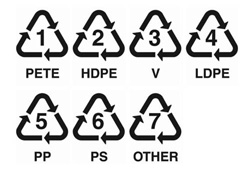
C. Plastic packs - Plastics can be shaped into different ways to serve diverse packaging applications. As more and more customers are cautious with the environment, and disposal of plastics has become one of their main concerns. In fact, today technology enables plastic packaging to meet different degrees of recycling requirements. To elaborate, plastic polymers (or resins) have become very popular in packaging, and resin identification coding system has been introduced in 1988 to meet recycling program needs. This is exactly the numbers and arrows we see everyday on plastic packaging. For instance
#1. Polypropylene (PET or polyester) - can be recycled as carpet, tote bags, film etc.
#2. High density polyethylene (HDPE) - can be recyled as household cleaners, recycling bins etc.
#3. Polyvinyl chloride (PVC) - can be recycled as carpet backing, floor tiles.
#4. Low density polyethylene (LDPE) - can be recyled as garbage can, trash can etc.
#5. Polypropylene (PP) - can be recycled as battery cases, bicycle racks etc.
#6. Polystyrene (PS) - can be recycled as video cassette casings, vents etc.
#7. Other
E. Skin packs - Skin packs are very similar to blister packs with one key difference. While blister packaging is made from pre-formed plastic, skin packs are formed around the product itself as it is packaged via vacuum or shrinking wrap technique, thus it is less secure than blister packaging. Skin pack is usually used for low-cost items where security is of minimal concern like small hand tools, small toys etc.
F. Die Cut - Die cutting or shearing is used to cut paper into shapes that can't be conducted by regular paper cutter after printing. This is of utmost important when special shapes like window, round corner, thin stripes, pockets with precise dimensions on products are required. Combining with special clean folds, packaging boxes, folders, and pockets can be tailor-made to customer's requirements.
9. Bags
Carrier bags can be categorized into paper bags, plastic bags, and eco-friendly reusable bags. While paper bags can readily be recycled as aforementioned in 4. without creating too many enviornmental problems. Plastic bags, on the other hand, pose a threat to the environment and can't be readily recycled. Recently has seen a trend to using eco-friendly reusuable bags which are made by cotton or non woven polypropylene. Polypropylene (PP) is the prefect substitution to plastic as it possesses the same characteristics, which is as strong, lightweight and durable, as plastic, it can be easily recyceld by breaking it into other useful things like food containers, carpets, housewares, HDPE, PET etc.
A. Paper Bags - 。Paper bags can be made by different types of paper like kraft paper, laminated paper, crepe paper etc. The load bearing strengths of the paper bags depend on its design and size. Kraft paper and laminated paper bags provide the best strength and are suitable to carry medium weight products like electronic systems, kitchen wares, etc. Non-laminated paper bags are widely used for retailers or shoppers to carry smaller items like daily grocery, clothes, books etc.
Commonly used paper bag handles include paper twisted handle, hook handle, handles without knot, T-end rope handles, plastic handles, tipping rope handles, synthetic rope handles, jude tape handles
B. Plastic Bags - Plastic bags are general made from a polymer, polyethylene. There are altogether 3 types of polyethylene, namely high density polyethylene (HDPE), low density polyethylene (LDPE), and linear low density polyethelene (LLDPE). With its light weight and yet strong structure properties, HDPE is commonly used for glocery bags for supermarkets or take away bags for restaurants. LLDPE on the other hand has the property of very light weight and filmlike thickness, it is especially applicable for tear-away bags for grocery or laundry services. Shopping bags made from LLDPE are usually thicker and heavier and are much more durable than common shopping bags. Though plastic bags are recyclable as composite lumber only, they are not readily decomposed under normal condition as dumpings and thus posed a threat to the environment.
It should be noted that if we compare the carbon footprint of the production of a plastic bag with its paper counter part, paper bag consumes 70% less energy and releases 50% less greenhouse gas.